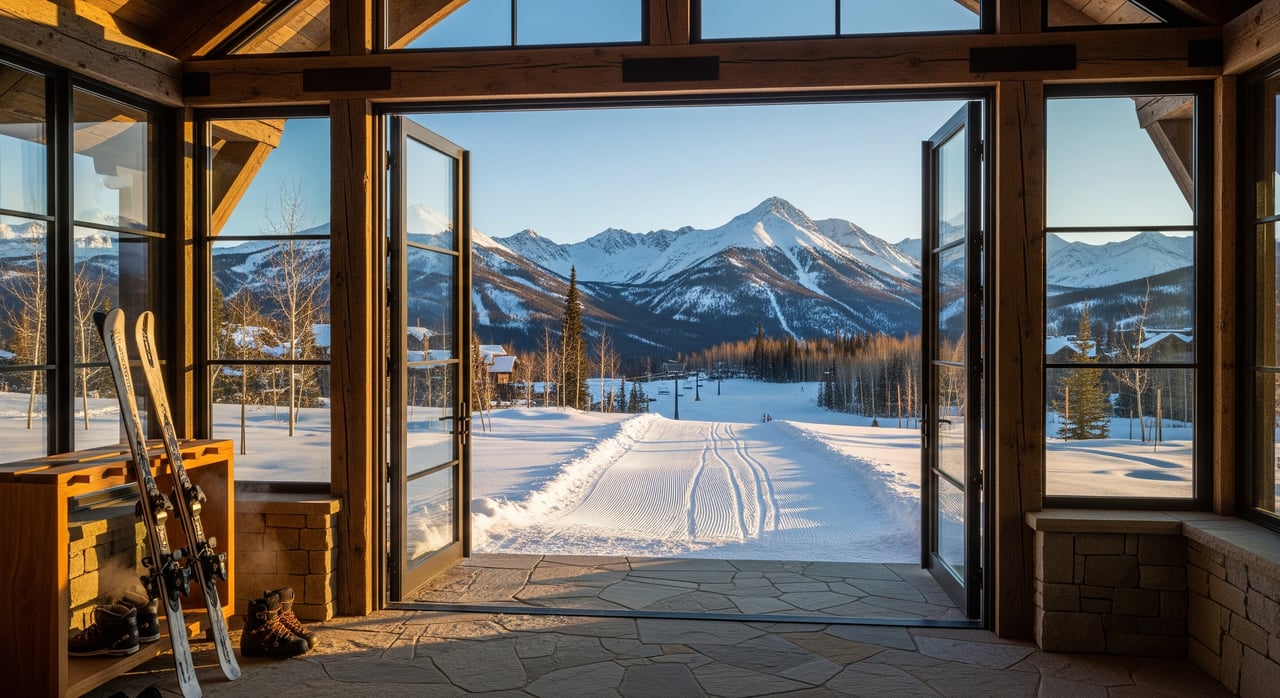
Picture stepping outside, clicking into your skis, and gliding straight toward a lift. That image sells a lot of property in Big Sky’s Mountain Village, but not every place that claims “ski-in/ski-out” lives up to your expectations. You want to know what the term really means, how it affects value and rental demand, and how to verify a listing before you buy. This guide breaks it down in plain language so you can choose the right fit for your lifestyle and budget. Let’s dive in.
What ski-in/ski-out means in Big Sky
Not all “ski-in/ski-out” is the same. In Mountain Village, access falls into a few practical categories that matter for your daily routine and your bottom line.
True ski-in/ski-out
- You can put skis on right outside your door and glide to groomed, resort-controlled terrain or a lift without walking or taking a shuttle.
- Returning home is also skiable in normal operating hours.
- These properties are slopeside and rely on maintained ski-out corridors or direct trail adjacency.
Near ski-in/ski-out
- You are very close but not literal door-to-slope.
- Expect a short walk, typically under 10 minutes, sometimes up or downhill, to reach a lift or groomed connector.
- You may carry skis or use a cleared path in winter conditions.
Shuttle or village tram access
- You are close to the base area and rely on regular shuttles or a village tram system.
- This is convenient resort access, but it is not technically ski-in/ski-out.
Mountain Village access 101
The Mountain Village is the main base area, with lift loading zones, services, lodging, and dining all clustered together. That layout shapes what “ski-in/ski-out” looks like in real life.
Why village location matters
- Properties inside the immediate village footprint have the best chance of true slopeside access.
- A single street, driveway, or parking lot between a building and the slope can shift a home from true ski-in/ski-out to near access.
- Where the property sits relative to lift lines and groomed connectors determines how easy it is to start and finish your ski day.
Routes to and from your door
- Investigate both directions. A route that is easy for skiing out in the morning may not be maintained or safe for skiing back after hours or in variable snow.
- Confirm whether access is appropriate for your ability level. Some connectors are gentle and beginner-friendly, while others may be steeper or require traversing.
Amenities that change convenience
- Secure ski storage, owner lockers, heated walkways, and ski valets can offset a slightly longer walk.
- A condo with great storage and a dedicated shuttle can feel more convenient than a single-family home right by the slope but without those services.
Price and value tradeoffs
Slopeside convenience is scarce in Mountain Village, and that scarcity shows up in pricing and rental demand.
Why proximity commands a premium
- All else equal, true door-to-slope homes command a meaningful premium over properties that require a walk or shuttle.
- The premium reflects guest demand for convenience, stronger rental potential, and the limited supply of slopeside units.
What influences the premium
- Market cycle and inventory. When demand is strong and slopeside inventory is scarce, premiums tend to rise.
- Unit type and size. A small slopeside studio and a large chalet can have very different price-per-foot relationships even with similar proximity.
- Views and outdoor space. Great views, sunny exposure, or a private deck can add value beyond pure access.
- Rental rules and services. If an HOA allows short-term rentals and offers professional management, investor demand usually increases.
- Parking and winter access. Eliminating winter driving is attractive, especially on on-mountain roads and in storm cycles.
How to compare apples to apples
- Treat ski-in/ski-out as a convenience premium, not a guaranteed resale boost.
- Compare recent sold comps by property type. Look condo-to-condo, townhome-to-townhome, and chalet-to-chalet to spot true pricing differences.
- Weigh operating costs. Slopeside HOAs may cover snow removal, heated walkways, or ski services that raise monthly fees but improve livability and rental appeal.
Property types to expect
You will see a mix of condos, townhomes, chalets, and resort-managed offerings in Mountain Village. Each comes with a typical access pattern and ownership considerations.
Condominiums
- Common in the base area with stacked units and shared amenities like lobbies, ski storage, laundry, and sometimes pools or spas.
- Many are slopeside or a short walk to lifts; some have direct ski-out corridors while others require crossing a plaza or connector.
- HOAs often set rules for rentals, owner use, maintenance fees, and guest services.
Townhomes
- Multi-level layouts with private entries and often garage parking.
- A strong fit if you want more space while staying close to the lifts.
- Many are very near access with a short walk, and some have direct ski-in routes depending on parcel placement.
Single-family chalets
- Detached homes offering privacy and larger footprints.
- True door-to-slope chalets exist but are rarer and usually at a higher price point.
- Many chalets marketed as mountain-adjacent require a short walk or equipment transport.
Resort-owned lodging and hotel-condos
- Professionally managed with integrated front-desk services and rental pools.
- Typically excellent lift access and strong guest services.
- Rental and use rules can be more structured, which may be a plus if you want turnkey management.
Rental potential and operations
If you plan to rent, access is a major demand driver in Mountain Village, especially during peak winter periods.
Demand patterns and rates
- Proximity to lifts and village amenities boosts nightly rates and occupancy during high season.
- Shoulder seasons and summer can add income if the resort promotes warm-weather mountain access and activities.
- Performance still varies by unit size, finishes, location, and included amenities.
Rules, permits, and programs
- Confirm local short-term rental requirements, tax collection, and any permits that apply to Mountain Village properties.
- Review HOA rules. Some communities limit or manage rentals tightly, and hotel-condo programs may use specific revenue splits and service fees.
Budgeting for operating costs
- Slopeside complexes may carry higher budgets for snow removal, avalanche or snow safety measures, and heated infrastructure.
- Include HOA assessments, management fees, and insurance when you model cash flow.
How to evaluate returns
- Gather three data points: advertised nightly rates, historical occupancy from local managers or HOA managers, and a full pro forma that includes all fees and taxes.
- Compare your findings with recent performance for comparable Mountain Village rentals to sanity-check projections.
Buyer checklist for verification
Marketing language can be broad. Use this checklist to confirm the level of access and the tradeoffs before you commit.
On-site access checks
- Walk the route with skis or in boots to confirm it is groomed, signed, and maintained by the resort or HOA.
- Test both directions: ski-out in the morning and ski-home in the afternoon, if possible.
- Confirm the route matches the ability level you expect to use and is typically open during operating hours.
- Check after-hours options for safe, lit pedestrian routes to entries and parking.
Documents to review
- HOA and CC&R documents for rental rules, snow and exterior maintenance responsibilities, parking policies, and guest access.
- Title and parcel maps to spot any road, easement, or public right-of-way between the building and the slope.
- Resort maps to verify lift and trail relationships and whether any connector is resort-controlled.
Financial and safety questions
- Request recent comps for slopeside vs near-village properties within the same product type and compare price per square foot.
- Ask about any special fees tied to snow or avalanche mitigation on slopeside corridors.
Next steps
Choosing the right Mountain Village property comes down to matching access, budget, and operating goals. If you want maximum convenience and rental strength, target true door-to-slope options and prepare for a premium and higher HOA services. If you want more space or value, near access with excellent storage and a reliable shuttle can deliver a similar day-to-day experience at a lower price point. Either way, verify the route in person, review the HOA and resort materials, and compare like-for-like comps.
If you are weighing units right now and want a clear comparison with verified ski access, HOA rules, and recent slopeside comps, connect with a trusted local guide. Reach out to Julie Blakeley to talk through options, request recent Mountain Village sales, or set up listing alerts so you receive listings in your inbox.
FAQs
What is the difference between true and near ski-in/ski-out in Mountain Village?
- True means you can clip in at your door and glide to groomed terrain or a lift without walking. Near means a short walk or shuttle to reach a lift or connector.
How do I verify a Big Sky listing is truly ski-in/ski-out?
- Review resort trail maps, parcel maps, and HOA statements, then test the route in winter conditions. Ask the listing broker to describe distance and obstacles.
Are slopeside properties worth the premium in Big Sky?
- They often earn a convenience premium and stronger rental demand, but balance that against higher HOA fees and maintenance based on your usage and hold period.
Do Mountain Village condos always allow short-term rentals?
- Not always. Some HOAs limit or manage rentals. Confirm permissions, program rules, and any required management agreements in the CC&Rs.
Will I need a car if I own in Mountain Village?
- Many owners get by day-to-day without a car for lift and village access, but vehicles remain useful for groceries, off-mountain activities, and travel logistics.