If you are searching for a home in Gallatin Canyon, you are probably looking for more than square footage. You may want river access, room to breathe, easier access to recreation, or a home that feels rooted in Montana rather than interchangeable with anywhere else. In the Gallatin Gateway corridor, cabins, chalet-inspired homes, and custom properties each offer a different way to live in this landscape, and understanding those differences can help you focus your search. Let’s dive in.
Gallatin Canyon’s Real Estate Setting
Gallatin Gateway is best understood as a corridor community between Bozeman and Big Sky. Gallatin County’s planning documents place the Town Core around Mill Street, and more recent local assessment work notes that many residents think of the area more broadly, extending south to the mouth of Gallatin Canyon along US 191.
That corridor matters because the Gallatin River is the area’s physical backbone. Montana Fish, Wildlife & Parks describes the river as running about 44 miles through the narrow canyon, and the Forest Service treats Gallatin Canyon, Highway 191, and Big Sky as one recreation corridor known for fishing, hiking, backpacking, and scenic driving.
For buyers, that means home choices here are closely tied to land, access, and use patterns. A property’s style is only part of the story. Its setting, road access, water and wastewater setup, and relationship to the river often shape value just as much as finishes or square footage.
Cabins in Gallatin Canyon
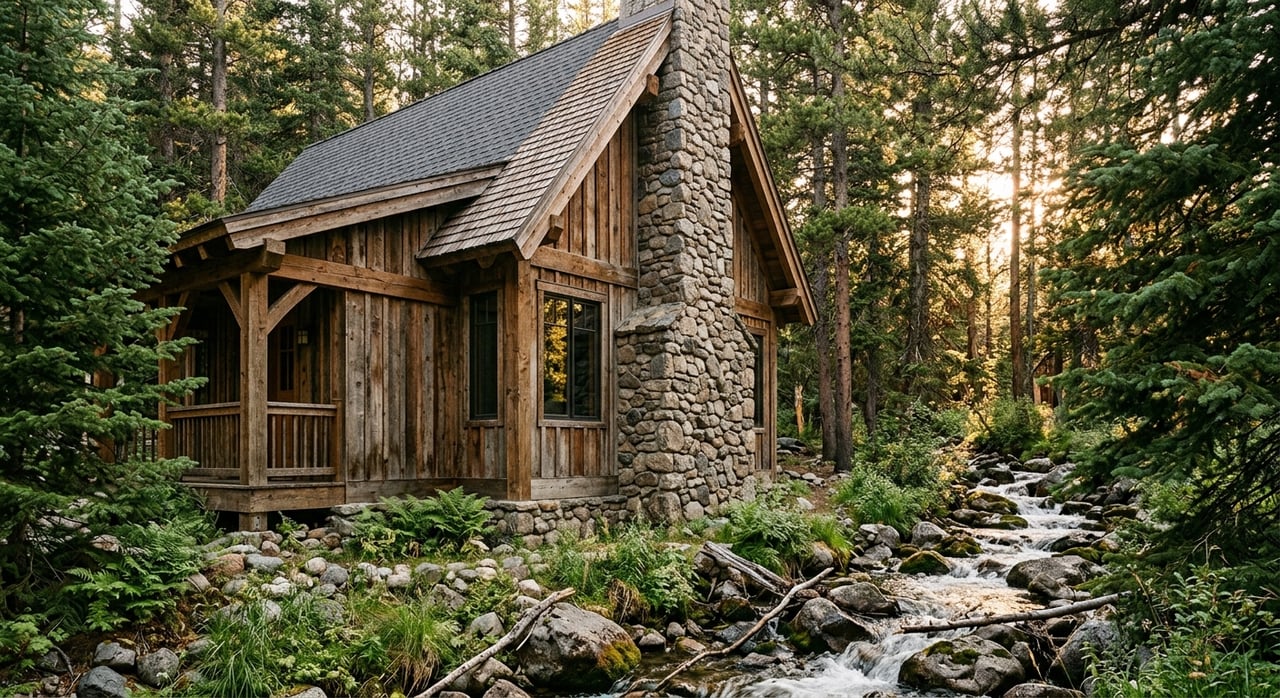
In Gallatin Canyon, the word cabin usually points to character more than a strict architectural template. Current market examples use terms like historic river retreat, rustic getaway, log home, and mountain retreat, which suggests that many cabin properties are older or design-forward homes with a strong sense of place.
Some buyers are drawn to cabins because they feel personal and grounded. You may find original wood floors, log construction, compact footprints, or sites close to the river and public land. These homes often appeal to buyers who want a retreat experience instead of a highly polished resort feel.
That said, cabin shopping in this corridor still requires a practical lens. Two homes that both look “rustic” online can differ quite a bit in acreage, access, river proximity, and utility systems, so it helps to evaluate the property beyond its visual charm.
What a cabin lifestyle can offer
Cabin buyers are often prioritizing simplicity and recreation. If you want easy access to fishing, hiking, or a quieter home base between Bozeman and Big Sky, this category can be a strong fit.
You may also find that cabin properties are closely tied to the land around them. In Gallatin Canyon, public lands, river access patterns, and the natural terrain all influence how a property feels day to day.
Chalet-Inspired Mountain Homes
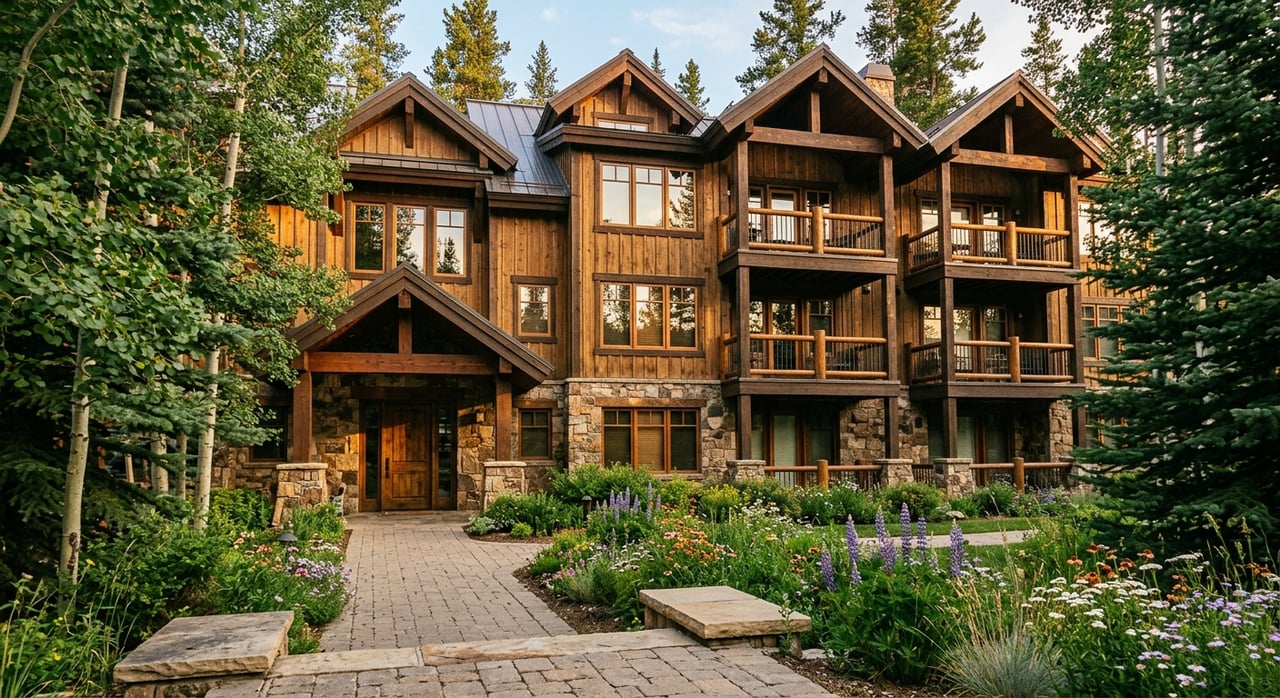
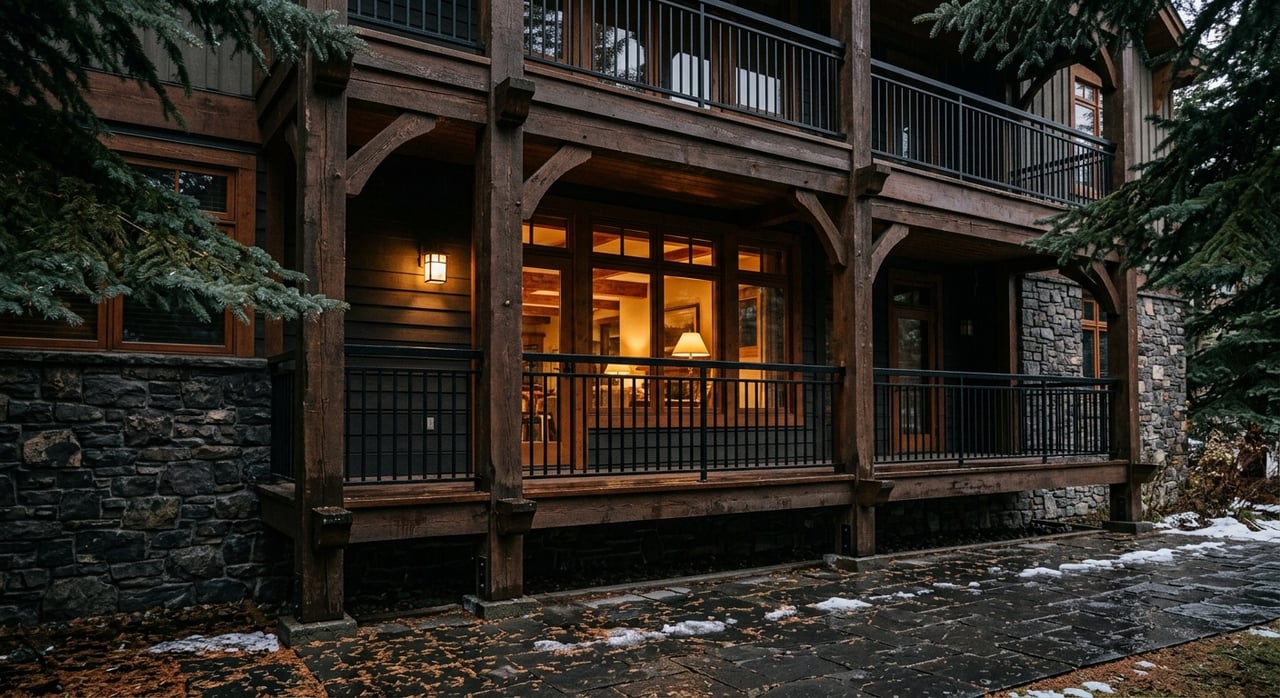
The chalet label is more common in the broader Big Sky resort market than in the canyon itself, but it is still a useful way to think about a certain home style. In this context, chalet-inspired homes usually suggest alpine rooflines, timber-heavy exteriors, and a mountain-lodge look that feels connected to skiing and four-season recreation.
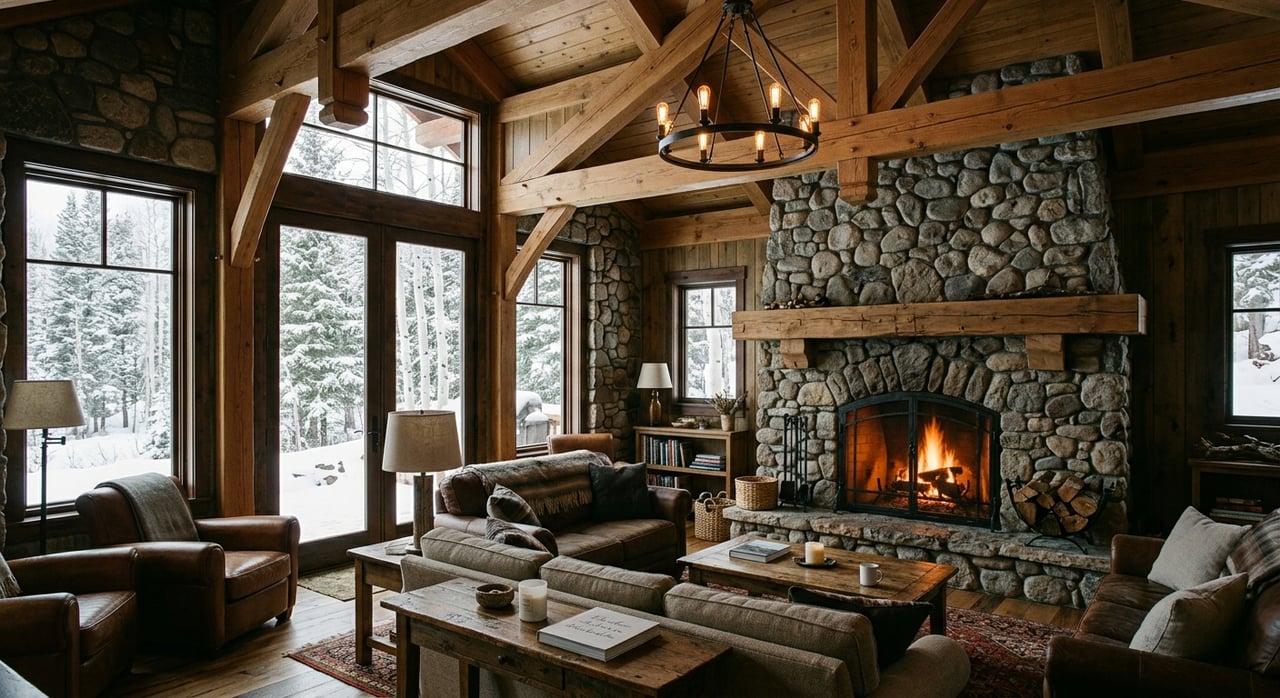
For some buyers, this style offers a middle ground between a rustic cabin and a fully custom estate. You may be looking for dramatic windows, a warm wood-and-stone palette, and architecture that feels elevated but not overly formal.
In Gallatin Canyon, chalet-inspired homes are often less about resort lodging and more about design language. They can deliver that classic mountain aesthetic while still functioning as a private residence with more independence and privacy than a village-centered property.
Why buyers look for chalet-inspired design
Many second-home and lifestyle buyers want a home that immediately feels like a Montana getaway. Chalet-inspired architecture can create that feeling through:
- Steep or expressive rooflines
- Heavy timber or wood-forward detailing
- Large windows for mountain or river views
- A strong indoor-outdoor connection
- A warm, alpine visual style
If you love the mountain-lodge look but want more land and less density than a resort village, this style may deserve a closer look.
Custom Homes on Acreage
Custom homes are a major part of the upper end of the Gallatin Canyon market. Recent local examples emphasize private acreage, guest houses, river or forest adjacency, and broad mountain views.
This property type often appeals to buyers who want privacy, flexibility, and a home tailored to the setting. In Gallatin Gateway’s rural areas, Gallatin County planning language describes older development patterns as large-lot areas using wells and septic systems, with low-density and clustered open-space patterns generally favored outside the Town Core.
That local planning context matters. A custom home here is not just about luxury finishes. It is also about how the home sits on the land, how it captures views, and how it works within local environmental and infrastructure constraints.
What sets custom properties apart
Custom homes in the corridor often stand out for a few reasons:
- Larger acreage and more separation from neighboring homes
- Design tailored to topography, views, and access
- Potential for features like guest houses or outbuildings
- Stronger emphasis on privacy and long-range mountain setting
- A more independent ownership experience than village-style living
For buyers coming from out of state, this category can be especially appealing if you want a legacy-style property with room to spread out and a stronger connection to the landscape.
Land and Build Opportunities
Vacant land is also part of the Gallatin Gateway and canyon market mix. Current examples range from parcels of around two acres to much larger tracts, including land adjacent to public ground.
If you are considering land, buildability should be front and center. County subdivision rules require a 300-foot structure setback from the Gallatin River and a 150-foot setback from smaller watercourses, so layout and site design can have a major effect on what is actually possible.
You will also want to understand whether a parcel relies on private systems or has utility availability. Some lots advertise water or sewer access, while much of the canyon still depends on private wells and septic systems.
Key questions to ask about land
Before you move too far into a land purchase, it helps to ask:
- Where are the required setbacks from watercourses?
- Is the parcel in or near a mapped floodplain?
- Are there channel migration considerations?
- Will the site rely on a private well and septic system?
- How does access work from US 191 or local roads?
- How much of the parcel is realistically usable for a homesite?
These are the kinds of details that can shape both cost and long-term enjoyment.
How Location Shapes Your Best Fit
The right home type often depends on how you want to use the area. If your goal is a recreation-first lifestyle, the canyon’s identity as a river and public-land corridor may matter more than being close to a concentrated amenity base.
Buyers who prioritize privacy and space are often better matched to Gallatin Gateway’s rural west and east areas. The community plan notes that these areas include agricultural and residential uses, with density kept low in part by working lands, habitat, access limitations, and floodplain constraints.
If you want a stronger small-community center of gravity, the Town Core may be more appealing. The county plan describes it as the place where residents gather for events, collect mail, and use a mixed residential-commercial main street.
Compared with Big Sky proper, the canyon is generally more dispersed and land-based. Big Sky’s Mountain Village is a compact base area with shopping, dining, lodging, and condo options, while Gallatin Canyon tends to suit buyers who prefer quieter, more independent ownership.
Practical Factors You Should Not Ignore
In Gallatin Canyon, the setting is a major part of the appeal, but it also comes with real planning and site considerations. Gallatin County says floodplain maps are based on FEMA studies effective April 21, 2021, notes the presence of channel-migration studies, and requires permits for certain work inside regulatory floodplains, including grading, fill, bank stabilization, and structures.
Water and wastewater are also important differentiators. The Gallatin Canyon Water & Sewer District says the canyon currently relies on private wells and numerous septic systems, and it is proposing nearly five miles of sewer main along Highway 191 to improve public health and reduce septic loading.
Wildfire planning matters across the entire area as well. The Gallatin Gateway Community Plan says the full planning jurisdiction is in the wildland-urban interface and calls for wildfire mitigation planning.
Access is another part of the picture. US 191 is the main travel spine, and MDT’s 2025 proposal to improve a 2.5-mile stretch south of Gallatin Gateway shows that safety and traffic flow remain active local issues.
Choosing Between Cabins, Chalets, and Custom Homes
If you are deciding between these property types, start with the lifestyle you want rather than the label. A cabin may be right if you value character, river proximity, and a more relaxed retreat feel. A chalet-inspired home may fit if you want classic alpine design and a strong mountain aesthetic. A custom home may be the best match if privacy, acreage, and tailored design matter most.
In this corridor, two properties with similar price points can offer very different ownership experiences. One may give you quick recreational access and a low-key setting, while another may deliver long views, more infrastructure complexity, and a stronger estate feel.
That is why local guidance matters here. In a market shaped by terrain, river setbacks, utility differences, and a wide mix of home styles, the best opportunities are often the ones that match how you actually plan to live.
If you are exploring Gallatin Gateway or Gallatin Canyon, working with a broker who understands both Big Sky and the surrounding corridor can help you compare options with more clarity. When you are ready to talk through cabins, chalet-inspired homes, custom properties, or land, connect with Julie Blakeley for thoughtful, local guidance.
FAQs
What kinds of homes are common in Gallatin Canyon?
- Common property types in the Gallatin Canyon corridor include character-rich cabins, chalet-inspired mountain homes, custom homes on acreage, and vacant land for future building.
What does a cabin home in Gallatin Gateway usually mean?
- In this market, a cabin often means a home with rustic character, log or wood-forward design, and a retreat-style feel rather than one standard floor plan.
How are chalet-style homes different from cabins in Gallatin Canyon?
- Chalet-inspired homes usually emphasize alpine design features like expressive rooflines, timber detailing, and large windows, while cabins often lean more toward rustic charm and historic or informal character.
What should you know before buying land in Gallatin Gateway?
- You should review watercourse setbacks, floodplain and channel migration considerations, utility setup, and site access because these factors can affect where and how you can build.
Why do custom homes appeal to buyers in Gallatin Canyon?
- Custom homes often appeal to buyers who want privacy, larger parcels, tailored design, and a home that responds closely to views, terrain, and the surrounding landscape.
What practical issues matter most when buying near the Gallatin River?
- Important factors include river setbacks, floodplain permitting, channel migration conditions, wildfire planning, access from US 191, and whether the property relies on private wells and septic systems.