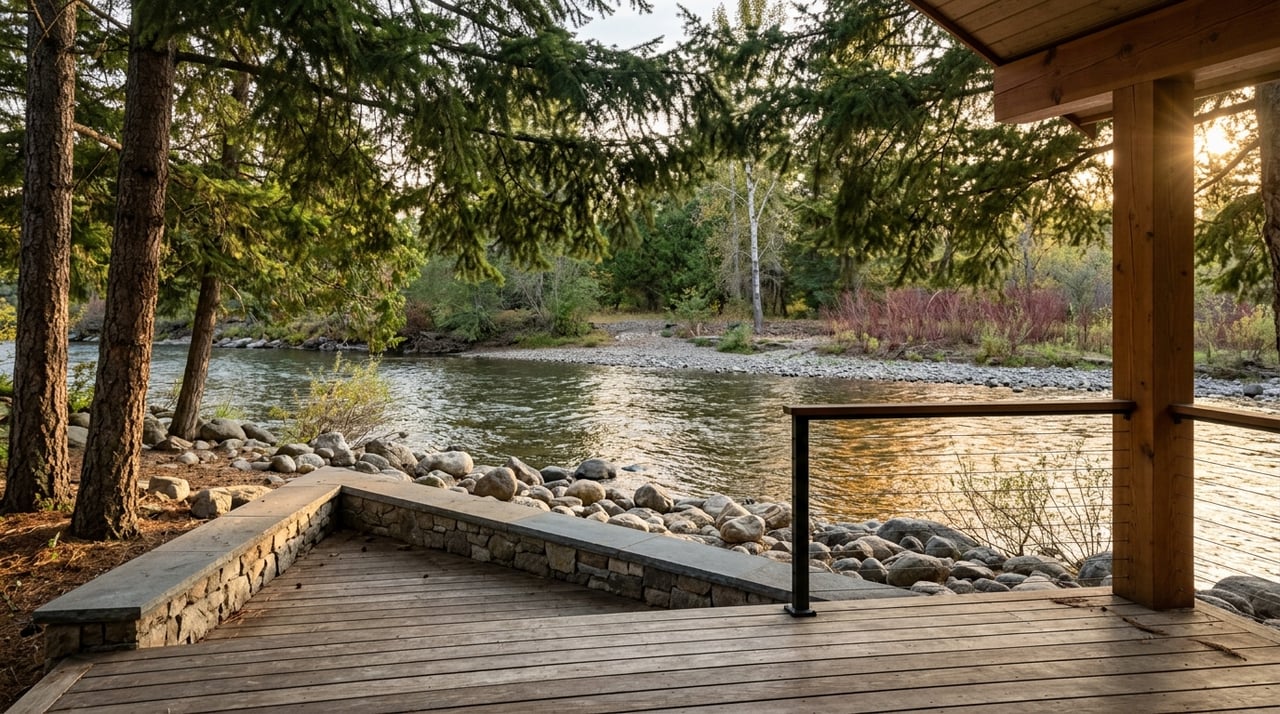
If you are dreaming about owning riverfront property in Gallatin Canyon, the water itself is probably the reason you are looking. The setting is beautiful, the lifestyle appeal is real, and the idea of waking up near the Gallatin River is easy to picture. But buying along the river also means looking closely at flood risk, channel movement, access rights, utilities, and permit rules before you fall in love with a parcel. Let’s dive in.
Why riverfront buying is different
Buying riverfront property in Gallatin Canyon is not the same as buying a typical homesite. A river-adjacent parcel can come with unique limits on where you can build, what you can improve, and how much of the land may remain usable over time.
In Gallatin County, mapped floodplains are based on FEMA studies and maps with an effective date of April 21, 2021. The county notes that these maps are used for informational and insurance purposes and do not capture every flood threat, which is why buyers should also review channel migration information and county mapping tools during due diligence. You can start with the county’s floodplain resources and updated mapper.
Understand floodplain and floodway limits
One of the first questions to answer is whether the parcel sits in a Special Flood Hazard Area, floodway, or another mapped flood-prone area. This matters for financing, insurance, and future building plans.
Gallatin County’s current floodplain regulations state that residential and non-residential buildings are prohibited in the floodway except for limited authorized uses. The regulations also require permits and engineering analysis for projects that could affect flood flows, including fill, excavation, structures, and some bank-stabilization work. You can review those requirements in the county’s floodplain regulations.
For a buyer, the practical takeaway is simple: do not assume a large lot gives you flexible building options. The river corridor may place real limits on siting, improvements, and future plans.
Channel migration matters in Gallatin Canyon
Flood maps are only part of the story. The Gallatin River is a dynamic river system, and channel migration can affect land much differently than a buyer expects.
According to the county’s Gallatin River channel migration study, maximum migration distances since 1965 exceed 600 feet in some areas, and average migration distances typically exceed 200 feet. That is a strong reminder that riverfront land is not always fixed in the way a plat map may suggest.
If you are evaluating a parcel, ask practical questions such as:
- How stable is the bank today?
- How much level, usable land exists outside higher-risk areas?
- Has the river shifted near this property over time?
- Could erosion change setbacks or future building choices?
These are not just technical questions. They directly affect long-term enjoyment, maintenance costs, and resale value.
Flood insurance is a separate decision
Many buyers assume flood damage is covered under a standard homeowners policy. In most cases, that is not true.
FEMA’s National Flood Insurance Program explains that most homeowners insurance does not cover flood damage, and flood insurance is required when a property is located in a Special Flood Hazard Area and financed with a government-backed mortgage. You can review the basics through FloodSmart’s eligibility guidance.
Gallatin County also notes that federally related financing can trigger mandatory flood insurance in Special Flood Hazard Areas, while warning that properties outside the mapped SFHA can still flood. That means you should ask your lender and insurance provider early in the process whether flood coverage will be required and what it may cost. Treat it as a separate underwriting item, not a last-minute detail.
River access and privacy are not the same thing
A lot of buyers picture riverfront ownership as complete privacy along the water. In Montana, that assumption can create confusion.
Montana Fish, Wildlife & Parks states that the public may use surface waters capable of recreational use up to the ordinary high-water mark, regardless of who owns the land under the water. At the same time, the adjacent floodplain is not automatically open for recreation without landowner permission, and the public does not have the right to cross private property to reach the river. Their stream access guidance explains these rules in more detail.
For you as a buyer, the key point is balance. River frontage may offer a special setting and direct adjacency to the water, but it does not always mean exclusive use of the entire corridor. You will want a clear understanding of what is private upland, what rights apply at the water, and how access works nearby.
Review title, easements, and recorded access
Before assuming a shoreline, driveway, or trail corridor is fully private, verify it. This step is especially important on larger parcels and in canyon settings where shared drives, utility corridors, and recorded easements may affect use.
Gallatin County’s Clerk and Recorder maintains public records related to land and ownership, and the county mapper links to tax records, the Montana Cadastral system, and recorded plats. Those tools make it easier to investigate recorded access and frontage questions before closing. Start with the Clerk and Recorder’s office resources.
A careful title, plat, and survey review can help clarify:
- Recorded easements
- Shared driveway rights
- Utility rights-of-way
- Frontage limitations
- Boundary questions near the river
This is one of the most valuable parts of riverfront due diligence because assumptions can be expensive.
Wells and septic need extra attention
In the Gallatin Canyon area, utility service often looks different than it does in more urban settings. Local utility information states that the area currently relies on private wells and numerous septic systems, which means a buyer should inspect both carefully. See the local Gallatin Canyon utility FAQ for context.
Gallatin County’s health department requires a wastewater treatment system permit before a septic system is installed, along with a site evaluation by a county-registered evaluator or Montana professional engineer. A county-registered installer must also be on site during installation. These details matter if you are buying vacant land, replacing an older system, or planning future improvements.
Montana DEQ also notes that private wells are not regulated by DEQ and their safety is not guaranteed. The agency recommends annual testing for coliform bacteria and nitrates, plus retesting after flooding or any noticeable change in water quality. You can review this guidance through Montana DEQ water resources information.
For riverfront property, well and septic questions should be part of your core inspection plan, including:
- Well yield and water quality testing
- Septic permit history
- Septic system age and condition
- Site limitations for repair or replacement
Bank work and shoreline improvements may need permits
Some buyers assume they can stabilize a bank, place fill, add a culvert, or make shoreline changes after closing. In reality, work on or near the river may require one or several approvals.
Montana DNRC’s stream permitting page lists potential approvals that may apply, including 310 permits, floodplain permits, Section 404 or 10 permits, and navigable-river licenses or easements. In Gallatin County, the conservation district administers the 310 law for projects that may physically alter or modify the beds or banks of perennial streams, rivers, or springs.
That means if a property seems to need erosion control or future bank stabilization, you should not treat that work as automatic. It is smart to contact the county planning department and conservation district before closing so you understand what may be allowed, what engineering may be required, and how long approvals could take.
A smart buyer checklist
If you are seriously considering buying riverfront property in Gallatin Canyon, here are the most important next steps:
- Use the county’s flood information request form and mapping tools to confirm whether the parcel is in Zone A, AE, the floodway, or a mapped channel-migration area.
- Review county floodplain regulations before assuming a homesite or improvement plan will be allowed.
- Ask your lender and insurer early whether flood coverage will be required and what it may cost.
- Order title, plat, and survey review for easements, frontage limitations, and shared access issues.
- Inspect the well and septic system, and budget for private well water testing.
- If any bank work or shoreline improvements seem likely, confirm permit requirements before you remove contingencies.
- Set realistic expectations about privacy, recreation, and public use along the river corridor.
Why local guidance matters
Riverfront property can be one of the most rewarding purchases in southwest Montana, but it also asks more from you as a buyer. The right property is not just about the view or the water. It is also about understanding the land, the river’s behavior, access, utilities, and the rules that shape future use.
That is where calm, local guidance matters. If you are exploring riverfront opportunities in Gallatin Canyon or nearby lifestyle markets, Julie Blakeley can help you evaluate properties with a practical, informed approach so you can move forward with more confidence.
FAQs
What should you check first when buying riverfront property in Gallatin Canyon?
- Start by confirming the parcel’s floodplain status, floodway presence, and any mapped channel-migration concerns using Gallatin County’s mapper and flood information tools.
Does homeowners insurance cover flood damage for Gallatin Canyon riverfront homes?
- Usually not. Flood damage is generally handled through separate flood insurance, and coverage may be required if the property is in a Special Flood Hazard Area and financed with a government-backed mortgage.
Can you assume your Gallatin Canyon river frontage is fully private?
- No. Montana allows public use of recreational surface waters up to the ordinary high-water mark, while private upland areas above that line are not automatically open to public use.
Are wells and septic systems common for riverfront property in Gallatin Canyon?
- Yes. The area commonly relies on private wells and septic systems, so buyers should inspect both carefully and include water quality testing in due diligence.
Do shoreline improvements on Gallatin River property require permits?
- They may. Bank stabilization, fill, culverts, bridges, and other work on or near the river can require county, conservation district, state, or federal approvals depending on the project.
Why is channel migration important when buying Gallatin River property?
- Because the Gallatin River is an active system that can shift over time, affecting bank stability, setbacks, and how much usable land remains near the water.